For Masha and Alisa
Names open cards of relatives, names of places open a map. Photos and documents can be enlarged.
The people whose stories make up ours
Маша and Alice, in one of the family photographs Маша stands on the embankment Novorossiysk next to Ekaterina Konstantinovna. There are 84 years between them. When Екатерина Константиновна When Katya was little, she did not yet know that she would become an engineer, that she would live by the Black Sea and that one day her great-granddaughter would be next to her.
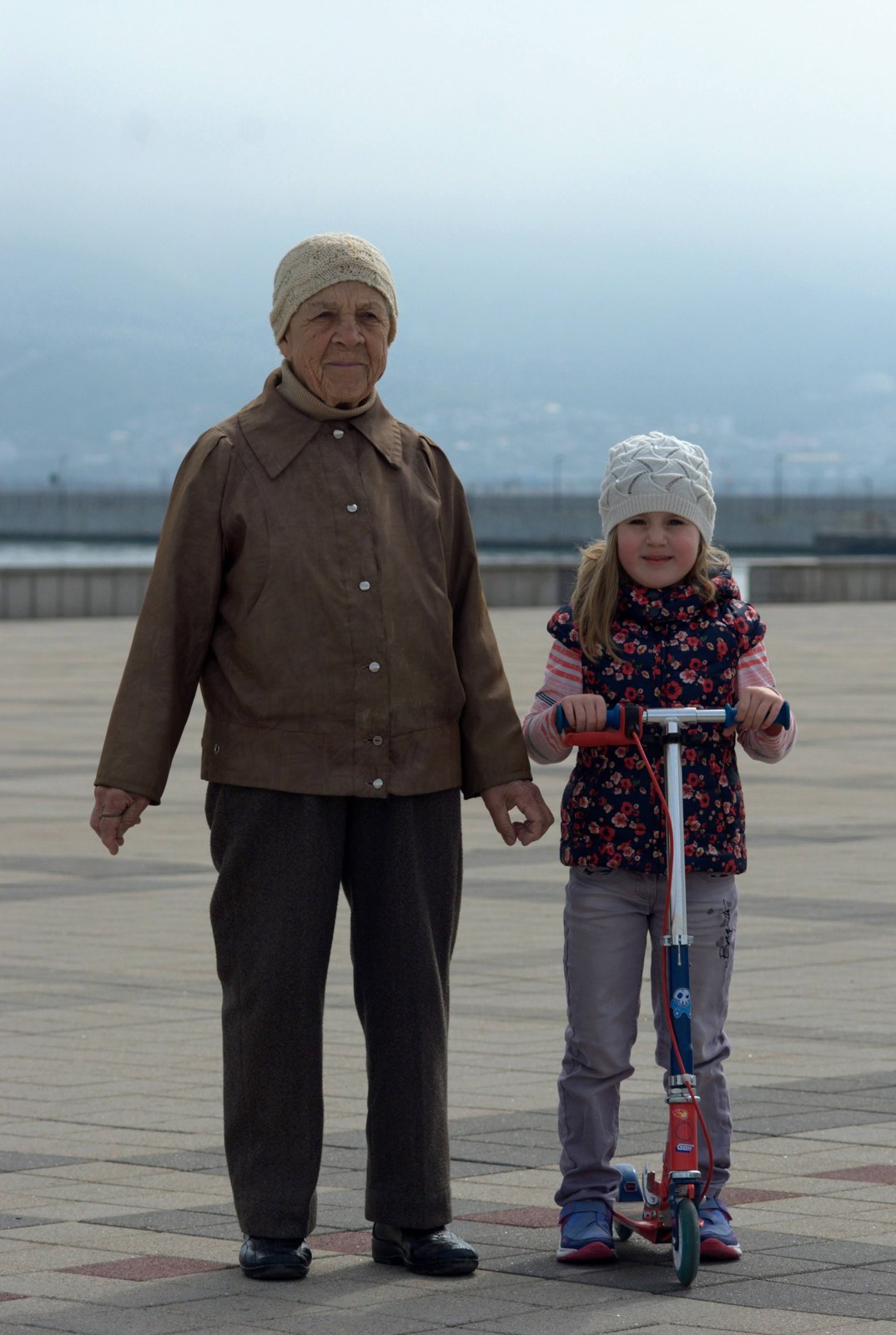
On September 25, 2026, your great-grandmother turned one hundred years old.
Her life includes six schools, moving, war, college, work, children, grandchildren and great-grandchildren. And also sheets of paper on which she wrote down what she remembered about her family. Thanks to these sheets, we can look into the lives of people born more than a century and a half ago.
Let's try to follow a few of their tracks.
Chapter 1Workshop on the Volga
B Puchezhe, a city on the Volga, lived Semyon and Anna Kolodiny. These are your mother's ancestors. They had a tailoring workshop where hired craftsmen worked.
We don’t yet know what kind of dresses or coats were sewn there. But we know that there were many children in the family and they were all sent to study in the neighboring Yuryevets. Later among them were teachers, a doctor and the head of the library.
The family manuscript says about the Kolodins: “They lived very amicably. We've helped each other all our lives." Later in this story, one of the relatives will appear more than once, to whom one could come to study or move in difficult times.
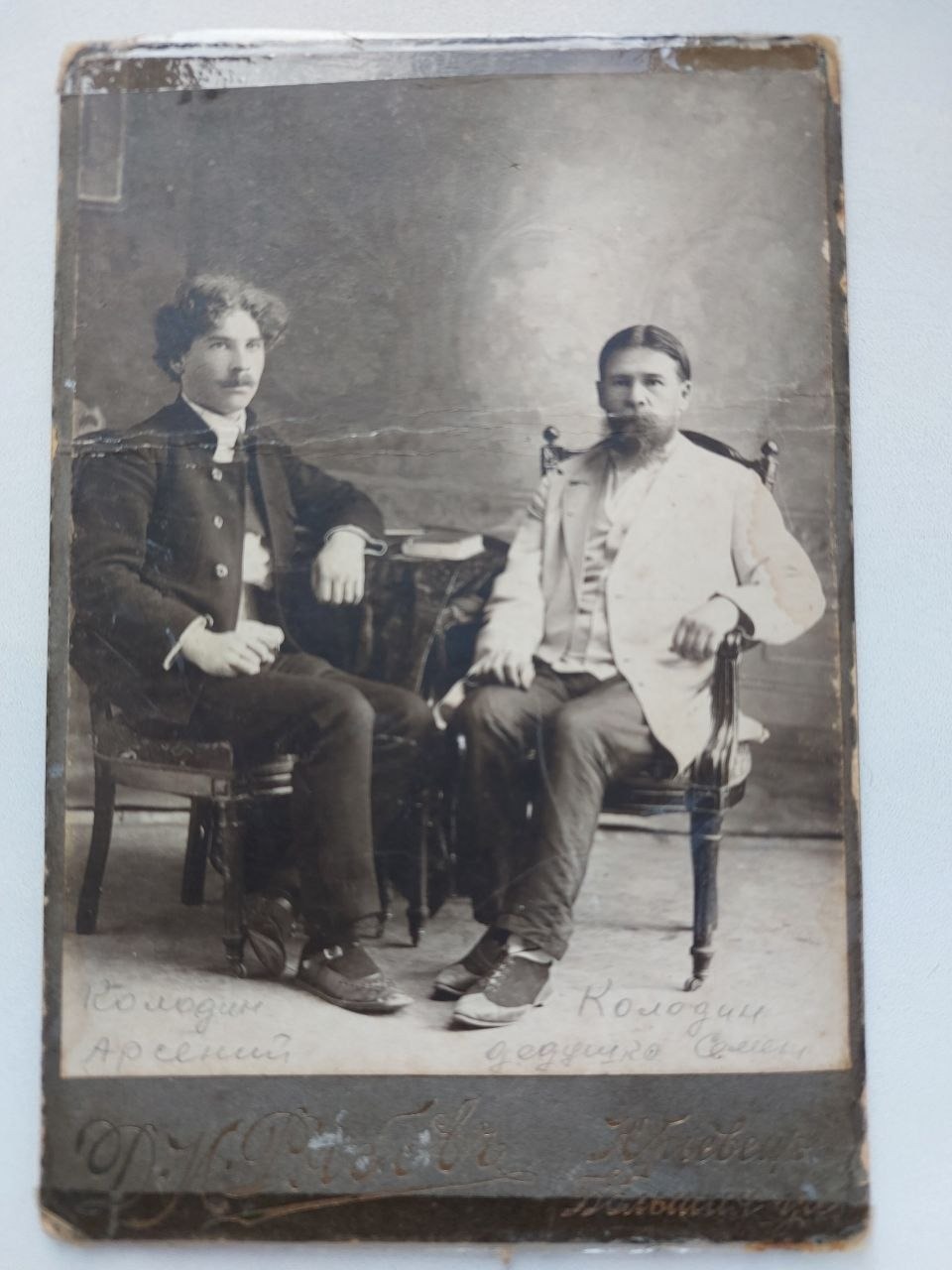
Photo preserved Semyon with my son Arseny. They were filmed in Yuryevtse. One of the descendants signed: “Kolodin’s grandfather Semyon.” For us he is a distant ancestor, but for a man with a pen in his hands he was just a grandfather.
Look at the photo: What two signatures would you leave on your family photo so that in a hundred years it would be easier for others to understand?
Chapter 2Teacher with a B in math
Daughter of Semyon and Anna, Alexandra, studied at the Yuryevets women's gymnasium named after Pushkin. She was a mom Ekaterina Konstantinovna - your great-great-grandmother.
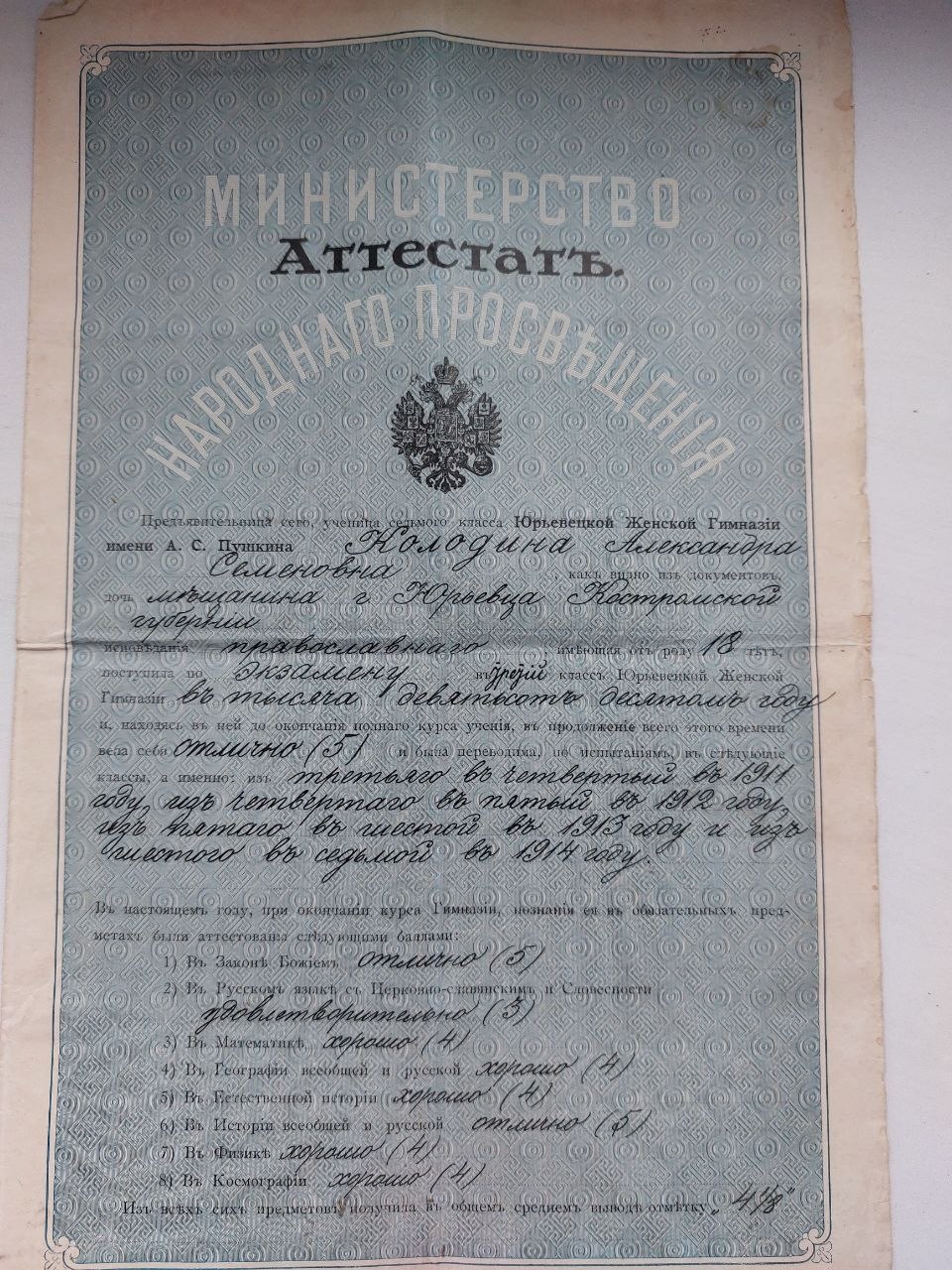
From Alexandra The original school certificate from 1915 has been preserved. She has an A in history, a B in mathematics and geography, and a C in Russian language. The average score is written as a fraction: 4⅛.
Among the items there is an unusual word - “cosmography”. This was the name of the subject about the Earth and celestial bodies. According to him Alexandra also a four.
After high school, she studied in an additional pedagogical class for another year. There they learned how to explain material to others. Alexandra I taught a trial lesson in mathematics and received a “good” for it. In 1916, she was given a certificate with the right to teach mathematics.
Her grades were different, but she still became a teacher. Her daughter remembered this, and now we have a document about how Alexandra got a profession.
Later Alexandra was seriously ill with typhus, lost hearing in one ear and, according to family recollections, could no longer work at school. Her life included work in accounting, caring for children, and moving. In recent years she lived with her daughter in Novorossiysk.
You can open her certificate: Which subjects remain in your school and which ones are called differently?
Chapter 3Katya, who changed six schools
Little Katya Figurovskaya born in Ostrogozhsk in 1926. Her father Konstantin was a military veterinarian - a doctor who treated animals. The family moved after his service. In ten years Katya changed six schools.
Each move meant a new class, new teachers and children who already knew each other.
When the war started Katya lived with my mother in Arkhangelsk. In the winter of 1941–1942 there was a lot of hunger there. They left the apartment and things and went to their relatives in Vyatskie Polyany. This is exactly what was preserved in the family manuscript: I had to give up everything that was at home.
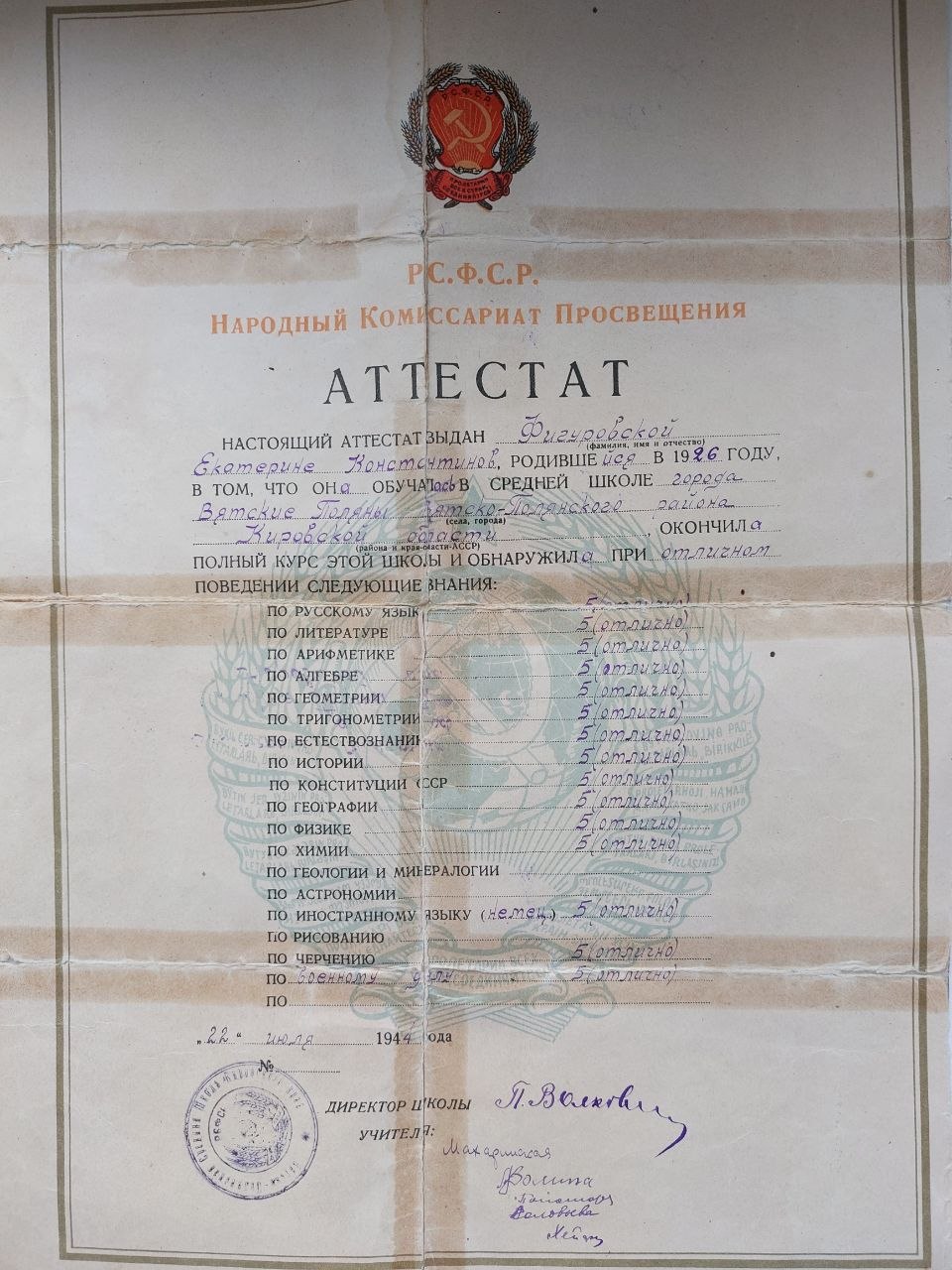
B Vyatskie Polyany Katya graduated from school. Her certificate was issued on July 22, 1944, while the war was still ongoing. “Excellent” in all subjects. Even in two that you rarely see side by side in today's school documents: German and military science.
Then aunt Maria invited her to study at Ivanovo. Katya entered the energy institute and began working in the energy sector - the field through which electricity comes to homes and businesses. After college she was sent to Novorossiysk. There she married Pavel Kamyshanov. Their daughter Галина - your grandmother.
So the way from the Volga Puchezha Through several cities he brought this part of the family to the Black Sea.
Chapter 4Thirteen year old tailor
My father’s family has another road - from Tula villages to the Moscow region. The Melnikovs are associated with Chernyaevka, Bushins and Fetisovs - with Lidinka.
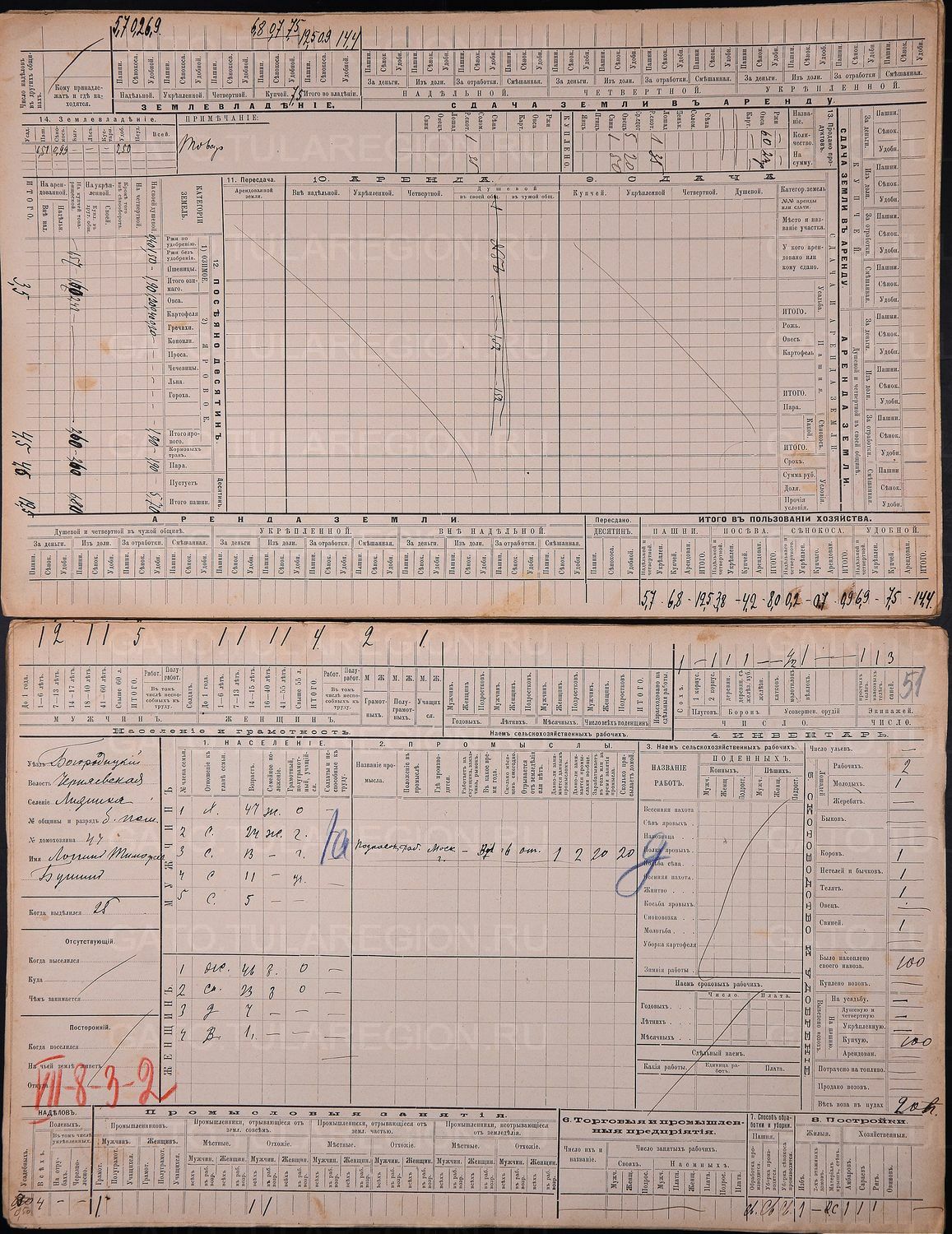
One of the most unusual documents of this branch is a census card of a village courtyard from the early 20th century. Recorded by the owner Loggin Timofeevich Bushin. Family members, their ages and occupations are listed next to them. The names of the rest, unfortunately, are not recorded.
One of the sons, who was thirteen years old, was already working as a tailor in Moscow and sent money home.
He was older Alice only three years or younger Masha by three. We don’t yet know what he thought about his work, whether he was homesick, or what he wanted to learn. The card only saved a few short answers. But even from them it is clear how different the life of a teenager in this family could have been.
We cannot yet confidently call this boy by name. There is an assumption that this Alexey, future father Valentina Bushina, dad's grandmother. To be sure, you need one more document.
In family searches, such unfinished stories are common. Sometimes the age is already known, the city is known, the profession is known - but the name has yet to be found.
Chapter 5The house where ten children grew up
Dad's other branch leads to Kapaklia, a village in Moldova. Lived here Grigory Calugareanu and Maria Pleshu - your great-grandfather and great-grandmother.
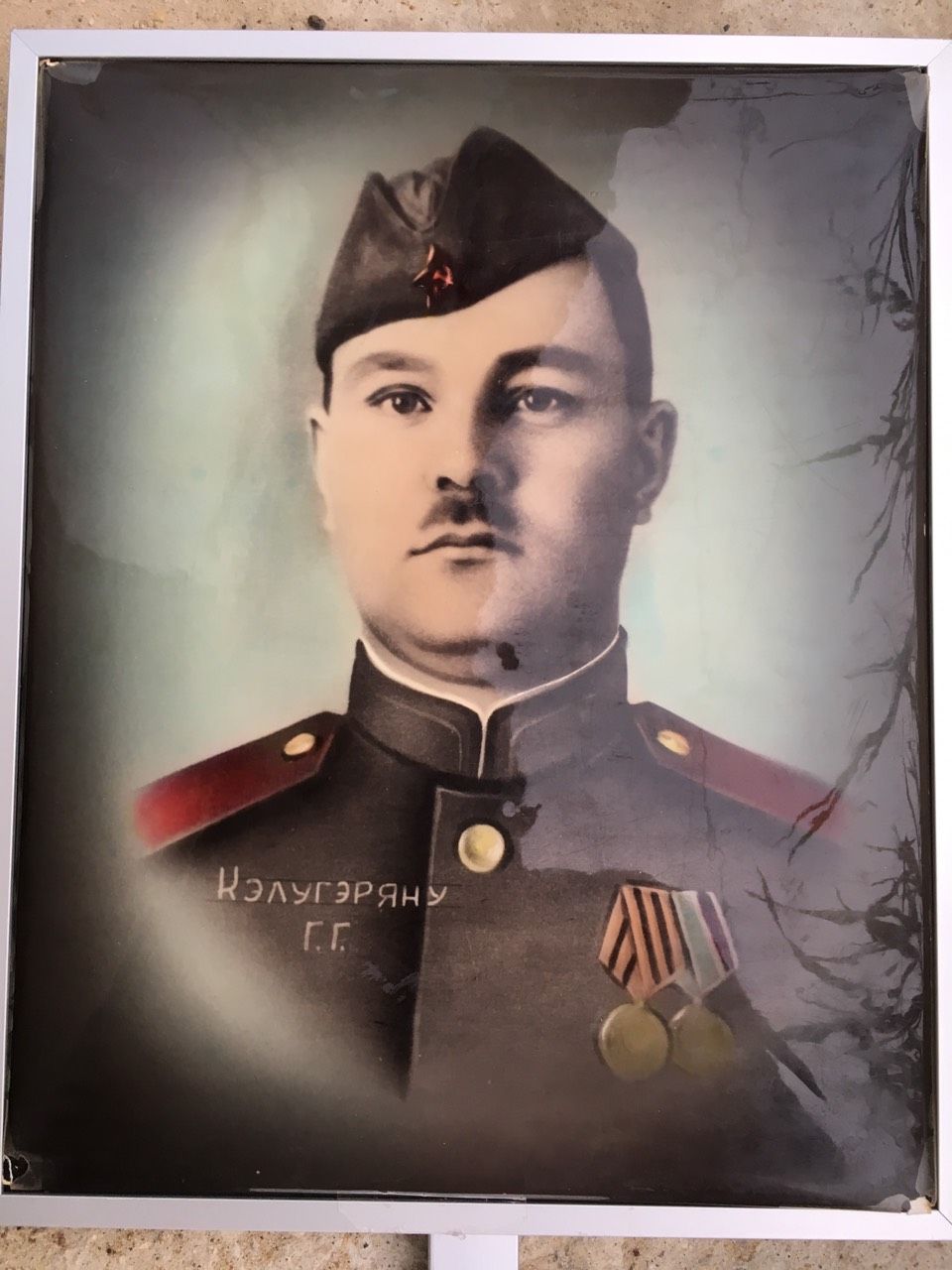
The family grew up to ten children. One of them Екатерина, - your grandmother, father's mother.
Try to imagine a family photograph that requires two parents and ten children. And then add their husbands, wives, children and grandchildren. Hence there are so many names in our tree.
Last name on documents Gregory looks different: Călugăreanu, Călugăreanu, Kalugarian. Maria in documents before marriage it was written as Pleș, and in the family her surname was pronounced “Pleshu”. Therefore, when searching, we check several spellings and compare dates, names of loved ones and places.
Gregory fought, was seriously wounded and received a medal “For Courage” for fighting for Berlin. His wife is mentioned in his award document Maria. This short entry helped make sure that it was our relative’s document that was found.
After the war, his life was again connected with Kapaklia and a big family. Gregory died in 2011, Maria - in 2013. They are buried nearby.
Chapter 6From Ashgabat to Norilsk
At your mom's dad's, your grandfather's Vadim, childhood was associated with two very different cities: Ashgabat and Norilsk.
His mom Людмила Петровна, nee Zamyatina, was a doctor. In the early 1960s she left Ashgabat in Norilsk with two sons - Dmitry and Vadim. According to family memories, Vadim I was about two or three years old then. Both brothers graduated from school already in Norilsk.
On the map these cities are far from each other: Ashgabat - in the south, in Turkmenistan, Norilsk - in the north of Siberia. One family move connects them with a line.
Later Людмила Петровна and her husband Viktor Alexandrovich Egorov returned to Ashgabatand then settled in Strunin in the Vladimir region.
Галина Павловна remembers how my father came there Lyudmila, Pyotr Petrovich Zamyatin. She saw him herself. This is a particularly valuable story for us: behind the name in the tree there appears a person whom living relatives remember.
There is still much to learn about this branch. Sometimes the most helpful next step is to ask your loved one to share what they remember about home, guests, or a family trip and to write down their words.
Chapter 7Portrait with an Unsolved Story
There is an old photograph of a man in uniform in the family archive. It says: "Кубеков Магомед Магомедович - great-grandfather of L.P. Zamyatina.”
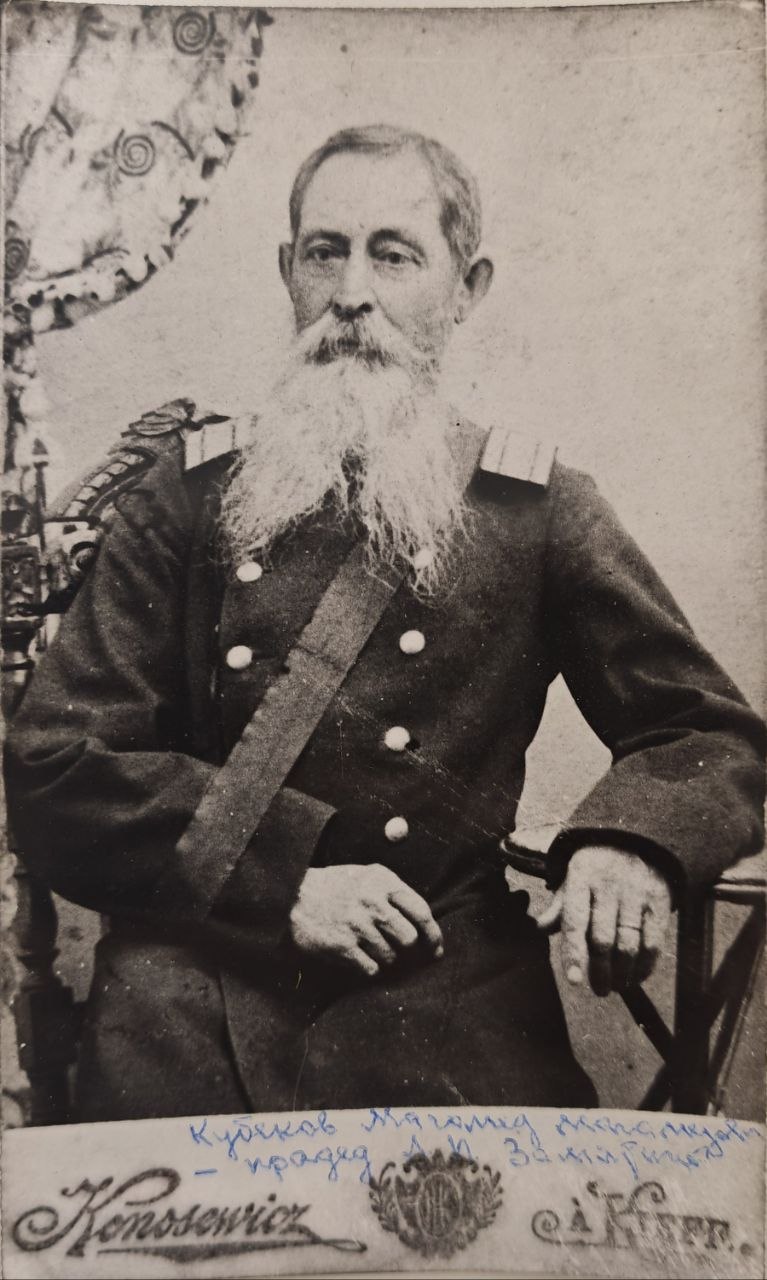
The photo was taken in a Kiev studio. The signature links him to Lyudmila Petrovna, which you just read about. But we are still finding out who exactly the relationship goes through.
The document has also been preserved Vera Alexandrovna Kubekova, who studied at Kyiv at the end of the 19th century. How to combine this evidence into one story is still unknown.
Here you can see how a real search works. We look at the photographer's inscription, read the school certificate, look up the name in the old city directory. Each find answers one question and often leaves several new ones.
Once this mystery is solved, this chapter will continue.
Chapter 8What will remain after us
In March 2001 Екатерина Константиновна I took graph paper - paper with a grid of small cells - and drew a family tree. Next to it she wrote her memoirs: who lived where, who she worked for, who she helped, what happened during the war.
Then neither Masha, nor Alice was not yet in the world. Now you can read her words and look at the people she talked about.
Our family included teachers, doctors, tailors, engineers, soldiers, a librarian and a geologist. Some lived in one village for many years, others moved across the country. There were heavy losses, illness and injustice. There were studies, work, weddings, children and help from relatives.
We don't know everything about them. But we can preserve what is still available: sign the photo, write down the grandmother’s story, ask what the name of the street was and who is sitting by the window in the old photo.
Also, write down something about yourself. What does your typical day look like? What do you like to do together? What is your favorite family trip?
Perhaps one day someone will open these records and say: “This is what they were like.” Маша and Alice».
Open the 2001 handwritten tree and memories of Ekaterina Konstantinovna. Most of our search began with these sheets.