Fetisov Fedor Prokhorovich (1909–1942), Kemi
brother of great-grandmother Александра
Birth: 1909-06-06
Death: 1942-12-01 POW camp No. 9, Kemi (Ajossaari), Finland
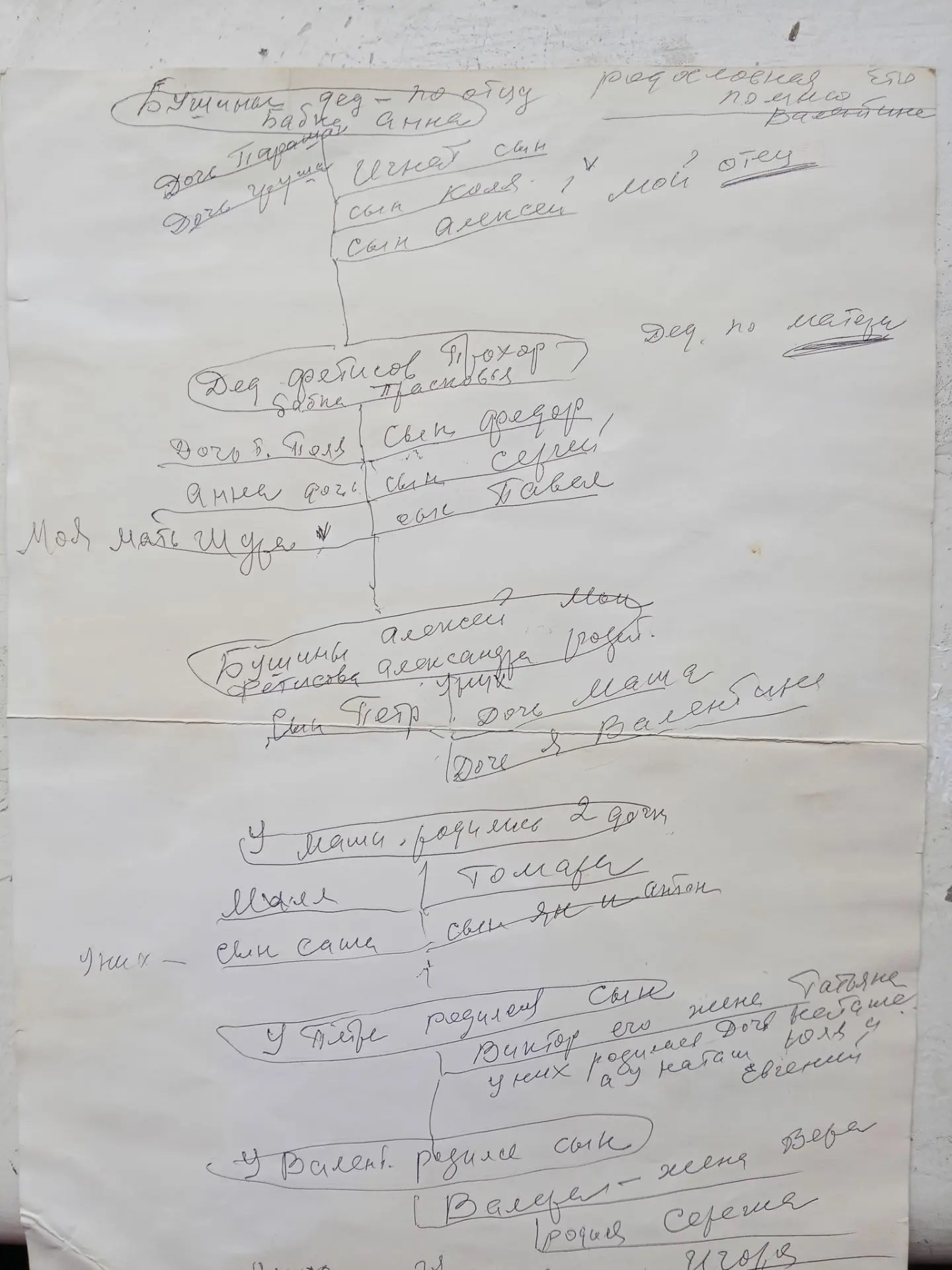
The name and relationship are recorded in a handwritten pedigree from Valentina's memory; no dates.
The patronymic is indicated by the father (Fetisov Prokhor).
According to Memorial OBD ( S66 ): private, 798th Artillery Regiment, 111th Infantry Division; On August 29, 1941 he was captured (Karelian Front); died in Finnish camp No. 9 in Kemi on December 1, 1942. In the OBD, the date of birth is 10 September 1909, in the metric index - 6 June 1909.
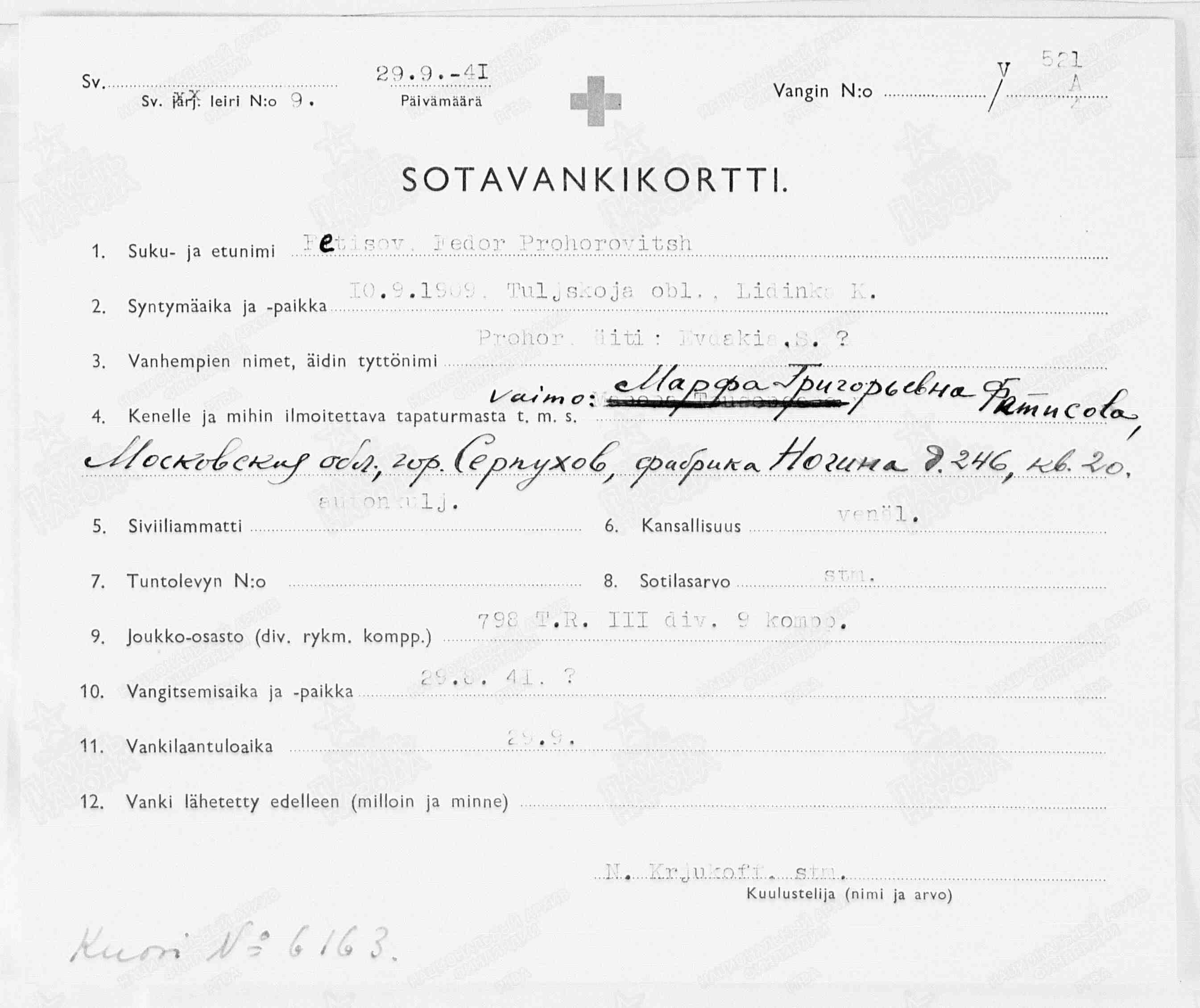
The Finnish prisoner-of-war card (S626) adds details. Before the war Fyodor worked as a driver and lived with his wife Marfa Grigorievna in Serpukhov: the “whom to notify” field says in Russian “Moscow region, Serpukhov, Nogin factory, house 246, flat 20”. He served in the 9th battery of the 3rd battalion of the 798th artillery regiment; he arrived in camp No. 9 on 29 September 1941, camp number V-521. His mother on the card is “Evdakia”, as in the parish registers (Evdokia Kondratievna). According to the card he died on 1 December 1942 of “ripuli” — diarrhoea (dysentery); he is buried in the prisoner-of-war cemetery on Ajos island in Kemi.
The year of death is not certain: in the National Archives of Finland database (S627) the date is 1 December 1941. This is plausible: in December 1941, 428 men died in camp No. 9, and in December 1942 only four. But the card itself says “1.12.42” by hand. The discrepancy could be resolved by his personal file — envelope No. 6163 in the National Archives of Finland, which may contain a death certificate.
Fyodor also appears in two consolidated Russian lists of those who died in Finnish captivity — on the “Soldat.ru” website (S697) and in the list of those buried in Finland circulated by the Russian Embassy (S698): both give birth 10.09.1909, death 1 December 1942, mass grave on Ajossaari. Both lists were apparently compiled from the same Finnish cards, so they do not settle the dispute about the year.
He was called up by the Serpukhov city military commissariat on the first day of the war, 22 June 1941; the commissariat list gives his residence as “Nogin factory, house 246” (S628), the same address as on the Finnish card. So before the war Fyodor and his wife lived in Serpukhov, at the Nogin textile factory.
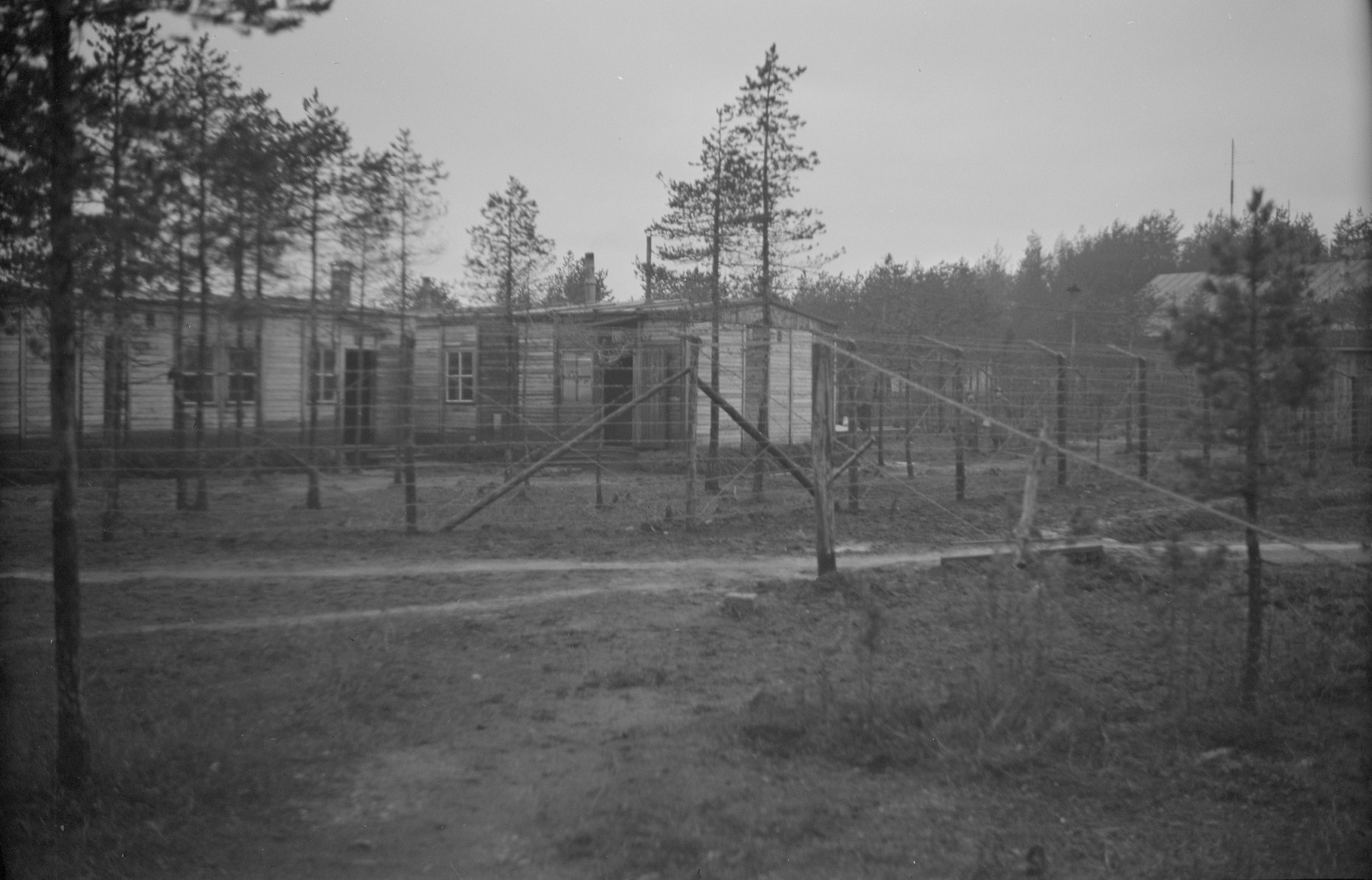
Camp No. 9, where Fyodor arrived at the end of September 1941, stood on Ajos island near the town of Kemi in northern Finland. Prisoners worked in the port, loading trains and German ships. Numbers here carried the letter «V» — hence his number V-521. According to the Finnish handbook of camps, 1,909 men died in camp No. 9 during the war, 760 of them in 1941 and 1,138 in 1942 (S803). Mass deaths of prisoners in Finland began in December 1941, from hunger, cold and disease; Fyodor died at the very start of it. The photograph of the camp was taken in autumn 1943 by a Finnish military photographer: barracks behind barbed wire in a pine wood (S802). The camp's records, including medical ones, are kept in the National Archives of Finland (T 7478–7486); a record of Fyodor's illness may be there.
Sources
- S10 . Handwritten pedigree "It's Valentine I remember" — Saved copy
- S64 . FamilySearch: family of Prokhor Timofeev Fetisov (Fitisov) and Evdokia Kondratieva Morozova, parish of the village. Chernyaevka, 1888–1911 — Original
- S66 . OBD "Memorial": Fetisov Fedor Prokhorovich, 10 September 1909, Lidinka village - prisoner of war, died in captivity 1 December 1942 — Original
- S626. Finnish prisoner-of-war card of Fyodor Prokhorovich Fetisov (Sotavankikortti), camp No. 9, 1941–1942 — Original — Saved copy
- S627. National Archives of Finland, database “Finland, prisoners of war and extraditions 1939–1955”: record of F. P. Fetisov — Original
- S628. “Memory of the People”: F. P. Fetisov in the list of men called up by the Serpukhov city military commissariat, 22 June 1941 — Original — Saved copy
- S697. soldat.ru: “List of Soviet servicemen who died in Finnish captivity in 1941–1944” — F. P. Fetisov — Original
- S698. List of Soviet servicemen buried in Finland (Russian Embassy data), Lappi province: F. P. Fetisov — Original
- S802. Prisoner-of-war camp No. 9 on Ajos island, Kemi, 1943: general view (SA-kuva 143216) — Original — Saved copy
- S803. Handbook of Finnish prisoner-of-war and internee camps 1939–1944 (Kansallisarkisto, 2008): camp No. 9 in Kemi — Original