Kemi (Ajos)
- Years
- 1942
Place in family records
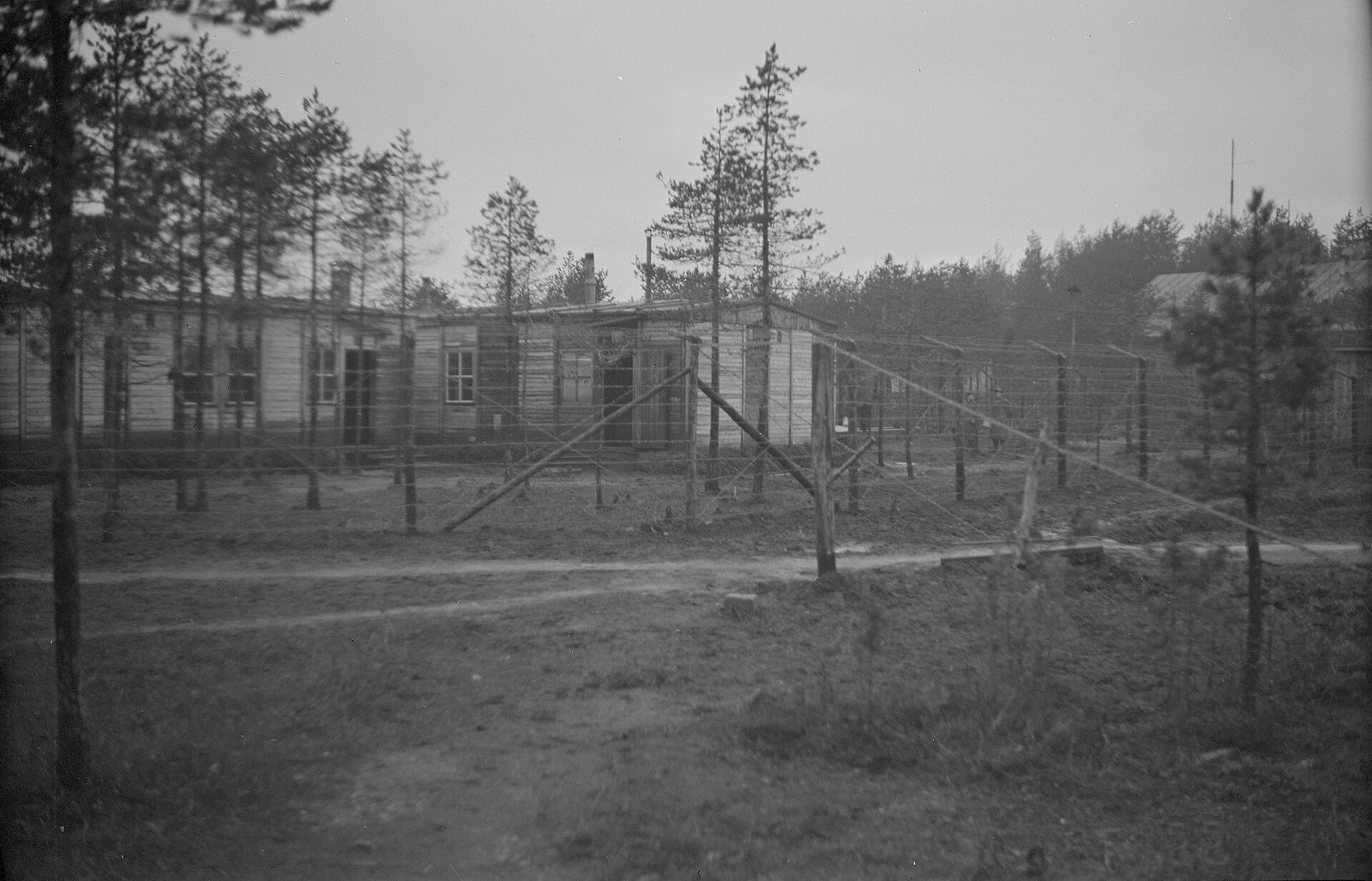
Fyodor Prokhorovich Fetisov died in Finnish captivity, in prisoner-of-war camp No. 9 at Kemi, and is buried in the camp cemetery on Ajos island (Ajossaari). The camp stood on Ajos island, by the deep-water harbour about 10 km from the centre of Kemi; the street leading to the cemetery is Sotavangintie — “Prisoners-of-War Street”.
Camp No. 9. The largest camp for Soviet prisoners of war in Finland (1941–1944), designed for 5,000 men. By the end of 1941 it held about 4,300 prisoners: some 2,500 in the main camp on Ajos, the rest in labour detachments all over Lapland, as far as road building near Kilpisjärvi. The prisoners built roads and the railway, felled timber and from 1942 built the first quay of Ajos harbour. From November 1941 to February 1942 more than a thousand men died — mostly of cold, hunger and disease; in February 1942 an average of 12 men died every day.
The cemetery. Prisoners were buried in mass graves at the edge of the camp, in a pine wood by Sotavangintie street. Today the cemetery has a red wooden fence, rows of white Orthodox crosses, a board with the names of the dead and an obelisk inscribed in Russian and Finnish: “Here lie buried 1,648 Soviet prisoners of war”. The cemetery is cared for by the Kemin Venäjän Ystävät society, and wreaths are laid here on 9 May. Of the camp itself a garage, storehouses, the concrete floor of the kitchen and a well remain.
What can be ordered: Fyodor's personal file — envelope “Kuori N:o 6163” in the archive of the Prisoner-of-War Bureau of the Finnish Red Cross (National Archives of Finland; it may contain a death certificate); a photo of the board with names at the cemetery and photos of the camp — at the Kemi Historical Museum. The main study of the camp is Ari Leskinen's article “Neuvostoliittolaisten sotavankien kuolleisuus sotavankileiri n:o 9:n alaisissa vankimuodostelmissa 1941–1944” (“Mortality of Soviet prisoners of war in the units of camp No. 9”) in the yearbook “Jatuli” of the Kemi Local History and Museum Society, vol. 21 (1990), pp. 302–326.
People
Sources
- OBD "Memorial": Fetisov Fedor Prokhorovich, 10 September 1909, Lidinka village - prisoner of war, died in captivity 1 December 1942
- Finnish prisoner-of-war card of Fyodor Prokhorovich Fetisov (Sotavankikortti), camp No. 9, 1941–1942
- National Archives of Finland, database “Finland, prisoners of war and extraditions 1939–1955”: record of F. P. Fetisov
- soldat.ru: “List of Soviet servicemen who died in Finnish captivity in 1941–1944” — F. P. Fetisov
- List of Soviet servicemen buried in Finland (Russian Embassy data), Lappi province: F. P. Fetisov